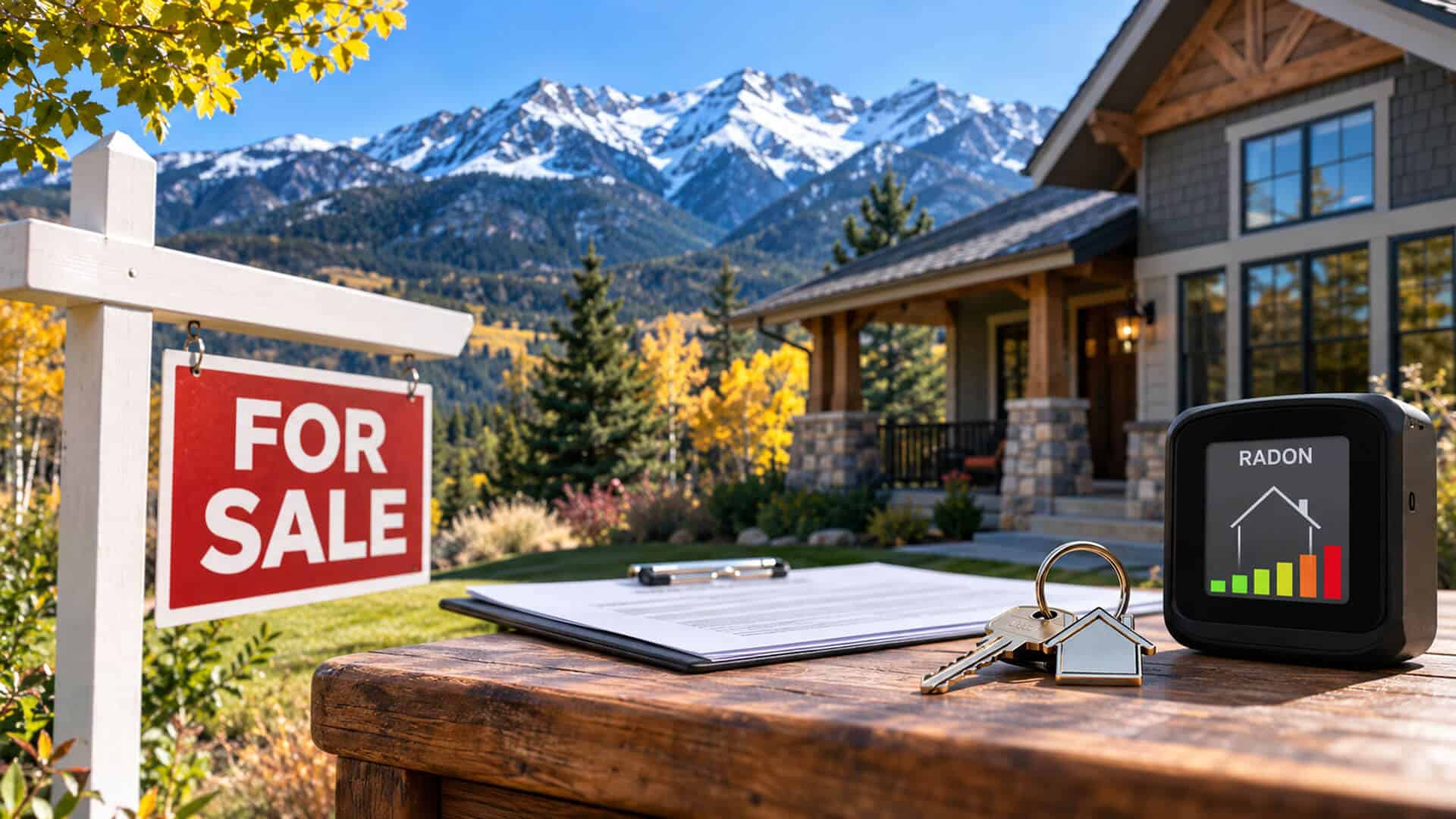
Selling a home is already a process filled with deadlines, inspections, negotiations, and paperwork. But what happens when your buyer’s home inspection reveals elevated radon levels? A test result above 4.0 picocuries per liter (pCi/L) can introduce another concern into your real estate transaction, potentially leading to additional negotiations, mitigation requests, or questions about your closing date.
The good news is that a high radon test result doesn’t automatically mean your home sale will fall through. With the right approach, you can address the issue, understand your options, and work toward completing the transaction on schedule. Installing a radon abatement system in Colorado is one practical solution for homeowners who want to address elevated radon levels before transferring ownership.
Aspen Radon helps homeowners in Colorado Springs, Monument, and surrounding communities understand their radon mitigation options. Whether you’re preparing to negotiate with a buyer or need a mitigation system installed before closing, knowing what to expect can make the process easier.
What Does a High Radon Test Result Mean When Selling Your House?
Radon is a naturally occurring radioactive gas produced by the breakdown of uranium in soil and rock. It can enter homes through foundation cracks, construction joints, openings around pipes, and other gaps where the building contacts the ground. Because radon is invisible and odorless, testing is the only reliable way to determine its concentration indoors.
The Environmental Protection Agency (EPA) recommends taking action to reduce indoor radon levels at or above 4.0 pCi/L. Although a result below this level is not considered completely risk-free, 4.0 pCi/L is the EPA’s recommended action level.
When a buyer’s inspection identifies elevated radon levels, the result may become part of the property’s inspection negotiations. The buyer might request professional mitigation, additional testing, or a financial credit to address the issue.
For sellers, this means understanding the test results and responding promptly. Instead of assuming the transaction is in jeopardy, consider obtaining a professional assessment to determine what mitigation options are available.
You can review the EPA’s Home Buyer’s and Seller’s Guide to Radon for additional information about radon testing and real estate transactions.
Your Three Options When a Buyer’s Radon Test Comes Back High
If your buyer’s radon test comes back above 4.0 pCi/L, you generally have three options to discuss with your real estate agent and buyer.
1. Install a Radon Mitigation System Before Closing
One of the most direct ways to address elevated radon levels is to install a professionally designed mitigation system before transferring ownership.
A typical active soil depressurization system uses a vent pipe and fan to draw radon from beneath the home’s foundation and exhaust it outside, reducing the amount that enters the living space. The appropriate system depends on the home’s foundation, construction, and other property conditions.
Advantages:
- Addresses the elevated radon levels before closing.
- Provides an opportunity for post-mitigation testing.
- Gives the buyer documentation of the mitigation work and test results.
- Most systems installed by Aspen Radon can be completed in one day.
Considerations:
- Requires an upfront installation expense.
- Installation and follow-up radon testing must be coordinated with the closing schedule.
For sellers who want to resolve the buyer’s concern before the transaction is completed, this option can provide a practical path forward.
2. Offer the Buyer a Financial Credit
Another option is to negotiate a price credit that helps cover the cost of future radon mitigation. Rather than arranging installation before closing, the buyer can use the agreed-upon credit to hire a mitigation contractor after taking ownership.
Advantages:
- May eliminate the need to coordinate installation before closing.
- Gives the buyer flexibility in selecting a contractor.
- Can be useful when the closing date is approaching.
Considerations:
- The buyer must agree to the proposed credit.
- The elevated radon levels remain unaddressed at closing.
- The buyer will need to arrange mitigation after purchasing the property.
Whether this option makes sense depends on the purchase agreement, negotiation terms, and buyer preferences.
3. Leave the Radon Issue Unresolved
You can also choose not to install a system or offer a financial credit. However, leaving an elevated radon result unresolved could affect the buyer’s willingness to proceed.
Potential disadvantages include:
- Additional inspection negotiations.
- Possible delays in the transaction.
- The buyer deciding to withdraw, subject to the purchase agreement.
- Having to address the same issue with another prospective buyer.
A high radon result doesn’t automatically cancel a real estate transaction. However, ignoring the concern may create unnecessary complications.
Before deciding, request a professional estimate so you can compare the cost and timeline of mitigation against the other available options.
How a Radon Abatement System in Colorado Helps Home Sellers
Installing a radon abatement system can help address elevated indoor radon concentrations before a property changes ownership. Although people often use the terms radon abatement and radon mitigation interchangeably, the goal is the same: reduce radon exposure by preventing the gas from accumulating inside the home.
Most residential mitigation systems use a fan-assisted ventilation approach. Depending on the property, a contractor may install a vent pipe beneath or through the foundation and connect it to a fan that moves radon gas safely outdoors.
Sealing certain foundation openings may also be part of the installation. However, sealing alone is not considered a reliable substitute for a properly designed mitigation system.
For homeowners searching for a radon abatement system in Colorado, it’s important to work with a qualified radon mitigation professional who can evaluate the property and recommend an appropriate solution.
The EPA’s Consumer’s Guide to Radon Reduction explains common mitigation methods and what homeowners should consider when hiring a radon contractor.
How Much Does Radon Mitigation Cost in Colorado?
One of the first questions homeowners ask after receiving an elevated radon test result is how much mitigation will cost.
The radon mitigation Colorado cost depends on several property-specific factors, including the foundation type, system design, installation requirements, and accessibility of the work area.
For example, a home with a conventional basement may require a different system configuration than a property with a crawl space or a more complex foundation.
Other factors that may influence the estimate include:
- Foundation construction and condition.
- Number and location of suction points.
- Vent pipe routing and installation complexity.
- Electrical requirements for the mitigation fan.
- Accessibility of the installation area.
Rather than relying on a generic online price, homeowners should request a property-specific estimate. This is especially important when the work needs to be completed before a scheduled closing date.
Aspen Radon can assess your home’s requirements, provide a written estimate, and discuss available installation scheduling options.
Radon Testing and Mitigation in Monument, CO, and Colorado Springs
Radon concerns can arise during real estate transactions throughout Colorado. Homeowners in different communities may encounter elevated results depending on their property’s location, construction, and surrounding geological conditions.
If you’re arranging radon testing and mitigation in Monument, CO, addressing the issue early can give you more time to coordinate installation and post-mitigation testing before closing.
The same applies to homeowners looking for radon mitigation in Colorado Springs. Once a buyer’s inspection identifies elevated levels, obtaining an estimate and discussing the available installation dates should be a priority.
Homeowners searching for radon mitigation in Cripple Creek, CO, should also consider arranging a professional property assessment to determine the appropriate mitigation approach and confirm service availability.
Regardless of location, a property-specific evaluation is important because radon concentrations and building conditions can vary significantly between homes.
Aspen Radon serves homeowners in Colorado Springs, Monument, and surrounding communities, helping them understand their mitigation options and coordinate work around real estate deadlines.
How Long Does Radon Mitigation Take Before Closing?
Timing is particularly important when your home is already under contract. You need to know how long installation and post-mitigation testing will take so you can coordinate with your real estate agent and buyer.
In most Colorado Springs home sales, Aspen Radon can help move the process from an initial call to a completed mitigation system and post-mitigation test report in approximately 7–14 days. The actual timeline depends on your closing date, crew availability, and the testing method selected.
Here’s what the process generally looks like:
1. Initial Call and Estimate: Same Day to 1 Business Day
Contact Aspen Radon and provide your buyer’s radon test results and anticipated closing date. We’ll arrange a property visit and provide a written estimate.
2. Installation Scheduling: Usually Within 7–14 Days
After approving the estimate, we’ll coordinate an installation appointment. Some situations may qualify for expedited scheduling, depending on crew availability.
3. System Installation: Most Homes in One Day
Our crew installs the mitigation system, explains how it operates, and reviews the appropriate post-installation testing steps.
4. Post-Mitigation Testing: Approximately 3–4 Days for Digital Testing
If digital testing is selected, the monitor runs under closed-house conditions. Once the testing period is complete, Aspen Radon provides a written report that you can share with both real estate agents.
If charcoal testing is selected, you’ll deploy the test and mail it to the laboratory using the provided instructions.
5. Results and Possible Adjustments
If the post-mitigation result is higher than the level the system was designed to achieve, Aspen Radon can make adjustments and arrange additional testing under the applicable guarantee and warranty terms.
Because testing and scheduling requirements can vary, contact your mitigation contractor as early as possible rather than waiting until a few days before closing.
What Should You Prepare Before Contacting a Radon Mitigation Contractor?
Having the right information available can help make the initial estimate and scheduling process more efficient.
Before contacting a contractor, prepare the following:
- A copy of your buyer’s radon test report.
- Your property’s address and basic foundation information, if available.
- Your anticipated closing date.
- Any specific mitigation or testing requirements from the buyer’s agent.
- Your preferred installation timeframe.
You should also coordinate with your real estate agent regarding the purchase agreement, disclosure requirements, and any documentation the buyer expects.
Colorado’s radon disclosure requirements are an important consideration for sellers. The Colorado Department of Public Health and Environment provides guidance through its Dealing With Radon in Real Estate Transactions resources. Sellers should discuss their specific disclosure obligations with their real estate professional.
Keeping test results, mitigation records, and post-installation reports organized can make communication between both parties easier.
Frequently Asked Questions
1. Can I sell my house if the radon level is above 4.0?
Yes, an elevated radon test result does not automatically prevent you from selling your house. However, it may become part of the buyer’s inspection negotiations. You and the buyer can discuss mitigation, a financial credit, or other arrangements based on your purchase agreement and applicable disclosure requirements.
2. How long does it take to install a radon abatement system in Colorado?
Most residential radon mitigation systems can be installed in one day. For Aspen Radon’s home-sale process, the typical timeframe from the initial call to a completed system and post-mitigation test report is approximately 7–14 days, depending on scheduling and the testing method selected.
3. Who pays for radon mitigation when selling a house?
The buyer and seller can negotiate who pays for radon mitigation as part of the real estate transaction. Some sellers choose to install a system before closing, while others negotiate a financial credit that allows the buyer to arrange mitigation after purchasing the property. The final agreement depends on the parties and purchase contract.
4. Does a radon mitigation system guarantee a passing test result?
No mitigation system should be presented as a guarantee of a particular test result. A properly designed system is intended to reduce indoor radon concentrations, but actual performance must be verified through post-mitigation testing. If the result is higher than the level the system was designed to achieve, adjustments and additional testing may be necessary under the applicable warranty or guarantee terms.
5. Can radon mitigation be completed before my closing date?
Yes, it may be possible, depending on your closing date, property requirements, and contractor availability. Aspen Radon typically schedules installations within 7–14 days, with most systems installed in one day. Digital post-mitigation testing generally takes another 3–4 days, so contacting a contractor early is important.
6. Is radon mitigation necessary if the test result is slightly above 4.0 pCi/L?
The EPA recommends taking action to reduce indoor radon levels at or above 4.0 pCi/L. Although the result may be only slightly above that level, it should still be addressed. Discuss the test results with a qualified radon mitigation professional to determine the appropriate next steps.
7. Do I need another radon test after installing a mitigation system?
Yes. Post-mitigation testing is important because it helps determine whether the system is effectively reducing indoor radon levels. The selected testing method, testing conditions, and buyer’s documentation requirements should be discussed with your contractor and real estate agent.
Keep Your Home Sale Moving With Aspen Radon
A high radon test result can create additional pressure when you’re already working toward a closing date. However, you don’t have to navigate the process without knowing your options.
Installing a radon abatement system in Colorado can be a practical way to address elevated radon levels and provide your buyer with post-mitigation testing documentation. The key is acting early, obtaining a professional estimate, and coordinating installation with your real estate agent.
Aspen Radon helps homeowners in Colorado Springs, Monument, and surrounding communities address elevated radon levels with professionally installed mitigation systems. Most systems can be installed in one day, and our team works with homeowners and their agents to coordinate scheduling around real estate deadlines.
Need radon fixed to sell? Keep your closing date.
Contact Aspen Radon today, share your buyer’s test results, and let us help you understand your options.
Book a Free Radon Mitigation Estimate Before Closing.
Serving Colorado Springs, Monument, and surrounding communities.
About the Author
Chris Davis
Chris Davis is the founder and owner of Aspen Radon, a professional radon testing and mitigation company serving Southern Colorado since 1998. With decades of hands-on industry experience, Chris is committed to helping homeowners identify elevated radon levels, understand their test results, and find effective solutions to protect their indoor environments. Through Aspen Radon, he brings practical knowledge and expertise in radon testing, inspections, mitigation system installation, and remediation, helping property owners make informed decisions to reduce radon exposure and improve indoor air quality.