Radon is not something you can see, smell, or judge by how “healthy” a home feels. For homeowners near Lake George and Woodland Park, the safest path is to test first, then hire a professional radon mitigation professional if levels are elevated. This guide explains what to verify, what radon services should include, and how to compare providers without getting pushed into a rushed decision.
What should you look for in a radon mitigation expert?
Look for a Colorado radon professional who can document current national certification, explain the proposed system clearly, provide written scope and warranty details, and require post-mitigation testing. In Colorado, individuals conducting radon measurement or mitigation must be state rules recognize NRPP or NRSB certification as meeting the proficiency requirement for licensure.
That verification matters because radon work is both a health decision and a building-science decision. Aspen Radon is not simply “putting in a pipe.” They are evaluating how soil gas moves under your foundation, how the home is pressure-balanced, where a fan can be installed safely, and how the system can be monitored over time.
A practical screening process can save you from poor workmanship, noisy systems, unclear warranties, and disappointing test results. Before you schedule an estimate, ask for:
- Colorado expert information for the individual who will perform or supervise the radon work.
- NRPP or NRSB certification that matches the job, especially mitigation certification for system installation.
- Proof of insurance and a written contract before work starts.
- A clear testing plan before and after installation.
- A system design explanation, including suction point location, fan placement, vent termination, and any crawlspace sealing.
- Warranty and service terms, including what happens if a fan fails or levels remain above the target.
- Recent local experience with homes in mountain communities, basements, crawlspaces, slab foundations, and well-sealed homes.
If a provider will not share credentials, avoids written details, or promises results without radon testing, keep looking.
Radon risk is local, but every home still needs its own test
Lake George, Woodland Park, and the surrounding mountain communities sit in a region where radon deserves serious attention. EPA radon zone mapping identifies Colorado counties such as Park and Teller in Zone 1, the highest potential category, but EPA also warns that zone maps are not a substitute for testing an individual home.
Radon forms naturally as uranium and radium decay in rock and soil. It can enter buildings through floor cracks, construction joints, gaps around pipes, wall cavities, suspended floors, water supplies, and other openings. The EPA recommends fixing a home when radon levels are at or above 4 pCi/L, and it emphasizes that testing is the only way to know whether a building has elevated levels.
Local resources can help you start. Colorado State University Extension’s Teller County radon information notes that all Colorado homes should be tested and lists free radon test kit pickup locations, including the Teller County Building Department in Woodland Park and Teller County Public Health and Environment in Divide.
Reliable radon reduction services start with measurement
A trustworthy provider will not design serious radon reduction around a guess. They should ask whether you have recent test results, what type of test was used, where it was placed, how long it ran, and whether the home was operated under appropriate closed-building conditions for short-term testing.
For real estate transactions, many buyers and sellers use short-term professional testing because decisions need to happen quickly. For homeowners who are not under contract deadlines, longer-term testing can provide a broader picture of average exposure, especially when levels are near a decision threshold. The CDC summarizes the basic rule simply: testing is the only way to know whether high radon levels are present in a home.
A good radon company may offer or recommend:
- Short-term testing for a fast initial result or real estate timeline.
- Continuous radon monitors when time-stamped data and tamper indicators are useful.
- Longer-term testing when you want a better sense of year-round exposure.
- Post-mitigation testing after the system has been operating long enough to evaluate performance.
- Retesting after major changes, such as basement finishing, HVAC changes, foundation work, or crawlspace encapsulation.
Seasonal variation is another reason testing should be taken seriously. Radon levels can change with weather, ventilation habits, and heating conditions. If your result is close to the EPA action level, ask the professional whether a follow-up test, longer test, or immediate mitigation is the better next step for your situation.
How does the mitigation process usually work?
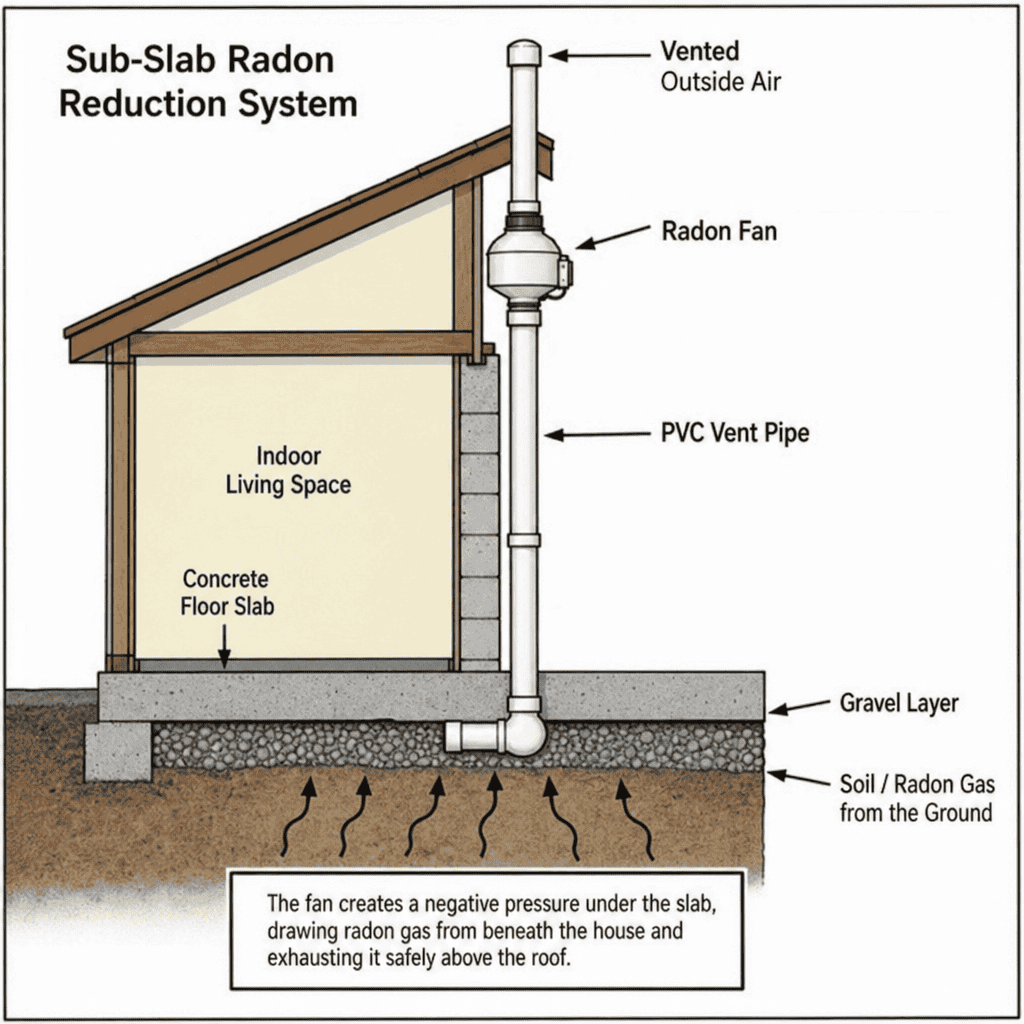
Most residential radon mitigation starts with a home evaluation, a written system design, installation of a soil-gas removal system, and follow-up testing to confirm the system is reducing indoor radon. The most common and usually reliable method for basement and slab-on-grade homes is active sub-slab suction, also called sub-slab depressurization.
In simple terms, the system creates suction beneath the slab so radon is pulled from under the home and vented outdoors instead of entering living areas. EPA guidance describes suction pipes installed through or below the slab, connected to a fan that draws soil gas from beneath the house and releases it outside. The number and placement of suction points depend on the foundation, soil movement, and diagnostic findings.
For homes with crawlspaces, the design may include a sealed membrane and active ventilation or depressurization. For homes with sump pits, drain tile, additions, or mixed foundations, the professional may need a more customized plan. This is where experience matters: a clean, quiet, effective system depends on more than having the right fan.
A typical professional process includes:
- Reviewing test results and deciding whether mitigation is recommended.
- Inspecting the foundation for slabs, crawlspaces, sumps, penetrations, and likely suction points.
- Planning the pipe route so the system is effective, serviceable, and visually reasonable.
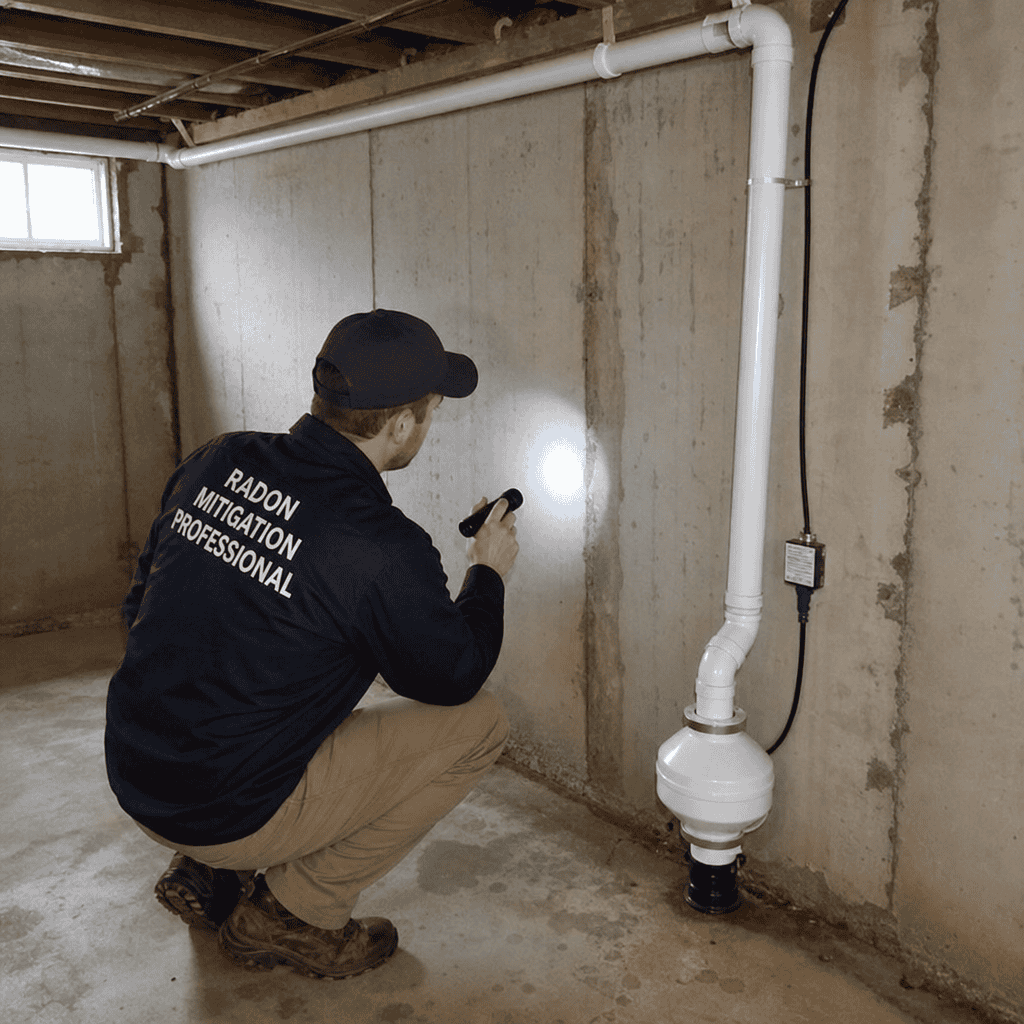
- Installing the fan and vent piping according to applicable standards and safety practices.
- Sealing key openings where it supports system performance.
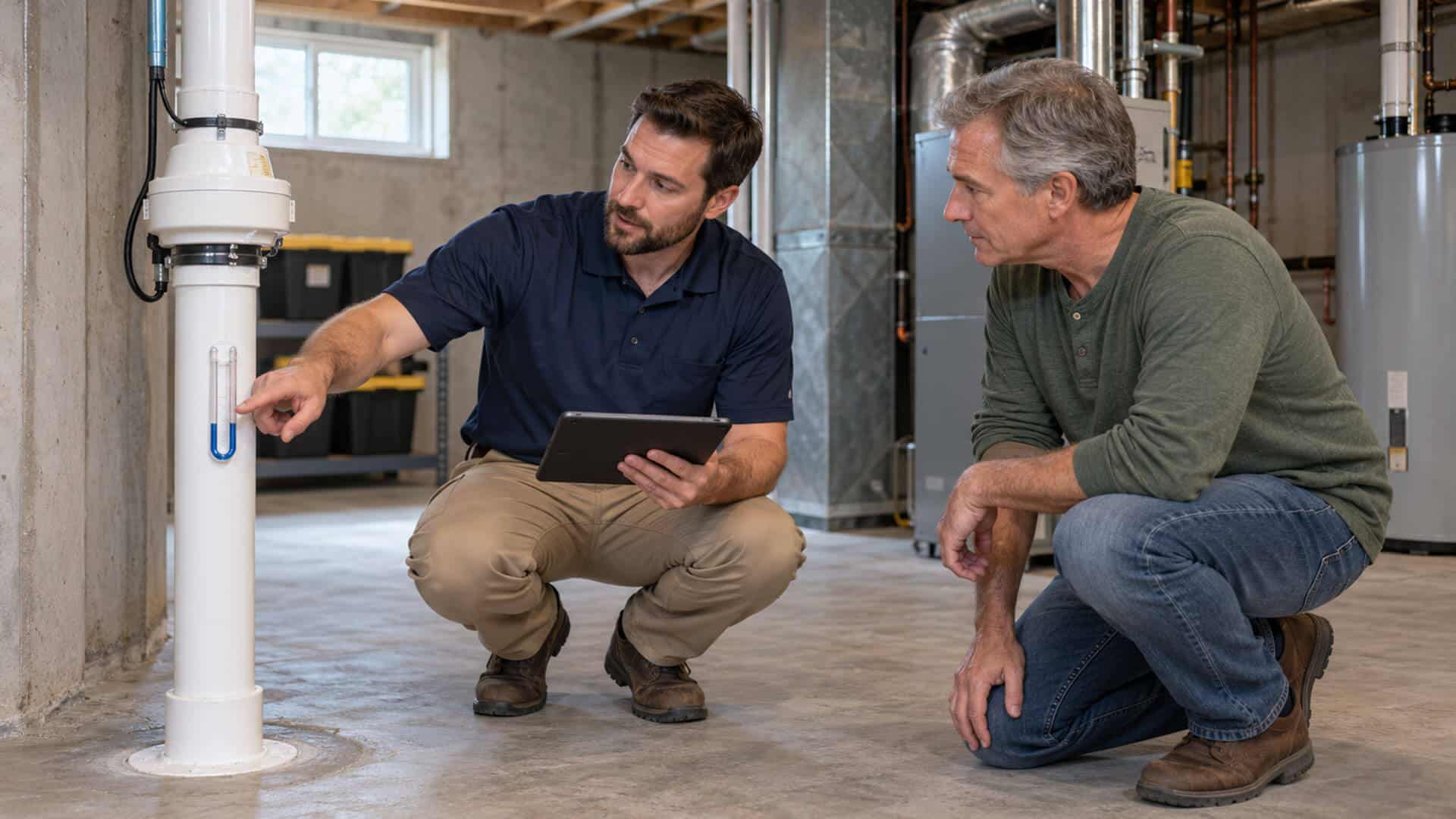
- Adding a system monitor so you can see whether the fan is creating suction.
- Completing post-mitigation testing to verify the result.
Transparent quotes protect you from surprises
Radon pricing can vary because homes vary. A small slab-on-grade home with simple access is different from a mountain home with a crawlspace, finished basement, multiple foundation areas, thick slabs, difficult vent routing, or electrical complications. Instead of shopping only for the lowest number, compare what each quote actually includes.
Ask whether the estimate includes permits if needed, electrical work, crawlspace membrane work, sealing, post-mitigation testing, warranty coverage, and follow-up if levels do not fall as expected. A low quote that excludes important pieces can become more expensive than a clear, complete proposal.
Use this quick comparison checklist when reviewing radon reduction services:
- Does the quote identify the specific mitigation method?
- Does it state who handles post-installation testing?
- Does it explain where the fan, pipe, and exhaust termination will go?
- Does it include warranty terms for parts and labor?
- Does it describe what happens if the system needs adjustment?
- Does the proposal avoid vague phrases like “standard system” without details?
You may search terms like “radon mitigation near Woodland Park,” or “Lake George radon reduction,” but search results alone are not proof of competence. Use online visibility as a starting point, then verify the provider through Colorado expert lookup resources, national certification directories, and direct documentation from the radon contractor.
Good providers talk about maintenance, not just installation
A mitigation system should not be ignored after installation. Fans can wear out, pipes can be damaged, crawlspace membranes can be disturbed, and home pressure conditions can change when you remodel or upgrade mechanical systems. A reliable radon expert will explain how to read the system monitor, when to retest, and who to call if something looks off.
The EPA recommends all homes and schools be tested for radon, and its guidance notes that radon reduction systems work and can reduce even very high levels. That does not mean every system performs forever without attention. The best peace of mind comes from a cycle of testing, mitigation, verification, and periodic retesting.
For homeowners near Lake George or Woodland Park, that is especially important because mountain homes often have varied foundations, seasonal ventilation changes, and renovations that can affect airflow. If you finish a basement, encapsulate a crawlspace, replace HVAC equipment, or change how lower-level rooms are used, schedule another test.
Reviews are useful when you read them carefully
Customer reviews can help, but look for patterns rather than one glowing comment. The most helpful reviews mention punctuality, clear communication, clean workmanship, successful follow-up testing, quiet fan operation, and responsive warranty support. Reviews that only say “great price” are less useful unless they also describe the quality of the system and follow-through.
When you call references or read reviews, listen for signs that the company explains tradeoffs instead of pushing a one-size-fits-all solution. A strong provider can tell you why a suction point belongs in one area rather than another, what noise level to expect, and how the system will be checked after installation.
The bottom line for local homeowners
Finding a reliable radon mitigation expert near Lake George or Woodland Park comes down to verification, clarity, and follow-up. Test your home, confirm that the professional is licensed in Colorado, look for NRPP or NRSB certification, compare written quotes carefully, and insist on post-mitigation testing.
Radon is invisible, but the process for dealing with it should not be. The right expert will make the work understandable, document the plan, install a system suited to your home, and help you keep radon levels managed over time.
Frequently Asked Questions
1. How common is radon in Colorado homes?
Radon is common throughout Colorado because the state has widespread areas with high radon potential. Levels can vary significantly between neighboring homes, so homeowners should have their own property tested rather than relying on nearby test results.
2. What is the best way to test for radon in a Colorado home?
Homeowners can use short-term or long-term test kits, while licensed professionals may use continuous radon monitors for more detailed measurements. The test should be placed in the lowest lived-in level of the home and conducted according to the testing device’s instructions.
3. How much does radon mitigation cost in Colorado?
Radon mitigation costs vary depending on the home’s foundation, number of suction points, crawl space conditions, pipe routing, fan requirements, and accessibility. Homeowners should request a detailed estimate that explains the proposed system rather than relying solely on a general online price range.
4. How long does a radon mitigation system last?
A properly installed radon mitigation system can provide long-term protection when it is maintained and monitored. The fan, seals, pipes, and system indicator should be checked periodically, and the home should be retested to confirm that radon levels remain low.
5. Can a radon mitigation system be installed in a home with a crawl space?
Yes. Homes with crawl spaces can often be mitigated using sub-membrane depressurization. This typically involves installing a durable gas-resistant membrane over exposed soil, sealing the membrane around edges and penetrations, and using suction to draw radon from beneath it.
6. Should I test for radon before buying or selling a Colorado home?
Yes. Radon testing can help buyers and sellers understand the property’s current radon level and address potential mitigation needs before or during a real estate transaction. Keeping copies of test results, mitigation records, and post-installation testing can also provide useful documentation for future transactions.
7. Why should I hire a licensed radon mitigation professional in Colorado?
Colorado requires radon professionals performing measurement and mitigation work to meet state licensing requirements. A licensed professional can evaluate the home’s construction, design an appropriate mitigation system, perform the work according to applicable standards, and help verify that the system is effectively reducing radon levels.
About the Author
Chris Davis
Chris Davis is the owner and founder of Aspen Radon, a locally owned radon company serving Southern Colorado since 1998. With decades of experience in radon testing, radon inspection, mitigation, and radon remediation, Chris is dedicated to helping homeowners understand radon exposure and take the right steps to improve indoor air quality. Through Aspen Radon, he provides knowledgeable guidance, dependable service, and practical mitigation solutions to help homeowners maintain safer, healthier indoor environments.