Understanding Radon Mitigation Services and Contractors
Radon is an invisible indoor air quality concern that can affect homes throughout Colorado. Because this naturally occurring radioactive gas has no color, smell, or taste, homeowners cannot determine whether their indoor environment contains elevated radon simply by looking around their property. Testing is the only reliable way to identify a potential problem.
For homeowners searching for Radon Mitigation Services and Contractors, understanding the testing, installation, and verification process is an important first step toward protecting their households. Professional radon contractors can evaluate a property’s conditions, recommend appropriate mitigation methods, and install systems designed to reduce indoor radon concentrations.
In mountain communities such as Cripple Creek and Woodland Park, homeowners may have additional questions about how their property’s foundation, surrounding soil, and construction affect radon levels.
Aspen Radon provides radon testing, inspections, mitigation, and remediation services throughout Southern Colorado. With a focus on property-specific solutions, the company helps homeowners understand their radon results and determine appropriate next steps.
Whether you are purchasing a house, renovating a basement, or addressing elevated radon readings, this guide explains how radon mitigation works and what to consider when choosing a contractor.
What Is Radon, and Why Should Colorado Homeowners Care?
Radon forms naturally when uranium in soil, rock, and groundwater breaks down. The gas can move through the ground and enter buildings through foundation cracks, construction joints, gaps around utility pipes, sump openings, and crawl spaces.
Once inside, radon can accumulate, particularly when a building’s conditions allow the gas to enter faster than it escapes.
According to the U.S. Environmental Protection Agency (EPA), prolonged exposure to radon increases the risk of lung cancer. Radon is the second leading cause of lung cancer in the United States after smoking.
The EPA recommends taking action to reduce indoor radon levels at or above 4.0 picocuries per liter (pCi/L). Homeowners may also consider reducing levels between 2.0 and 4.0 pCi/L because no known level of radon exposure is entirely risk-free.
Colorado homeowners should take radon testing seriously because local geological conditions can contribute to radon potential. However, risk varies between properties, even within the same neighborhood. A regional map or a neighbor’s test result cannot determine the radon concentration inside your own home.
The EPA’s radon zone information explains why geographic maps are useful for understanding regional potential but should not replace individual home testing.
What Do Radon Mitigation Services and Contractors Do?
Radon mitigation services focus on reducing radon concentrations inside buildings. A qualified contractor evaluates the property, determines an appropriate system design, and installs equipment intended to prevent radon from accumulating in occupied spaces.
Although every property has different requirements, professional radon mitigation generally involves several steps.
1. Radon Testing and Assessment
Testing establishes the property’s current radon concentration and helps determine whether mitigation is appropriate. Homeowners can use suitable DIY test kits or hire a professional radon measurement provider.
A contractor may also evaluate the foundation type, crawl spaces, existing ventilation, and potential entry points to understand the property’s conditions.
2. Customized Mitigation System Design
Once testing identifies elevated radon levels, the contractor determines which mitigation method is appropriate. Common considerations include whether the house has a concrete slab, basement, crawl space, or a combination of foundation types.
The design should account for the building’s layout and the conditions beneath the foundation rather than relying on a standard configuration for every home.
3. Professional Installation
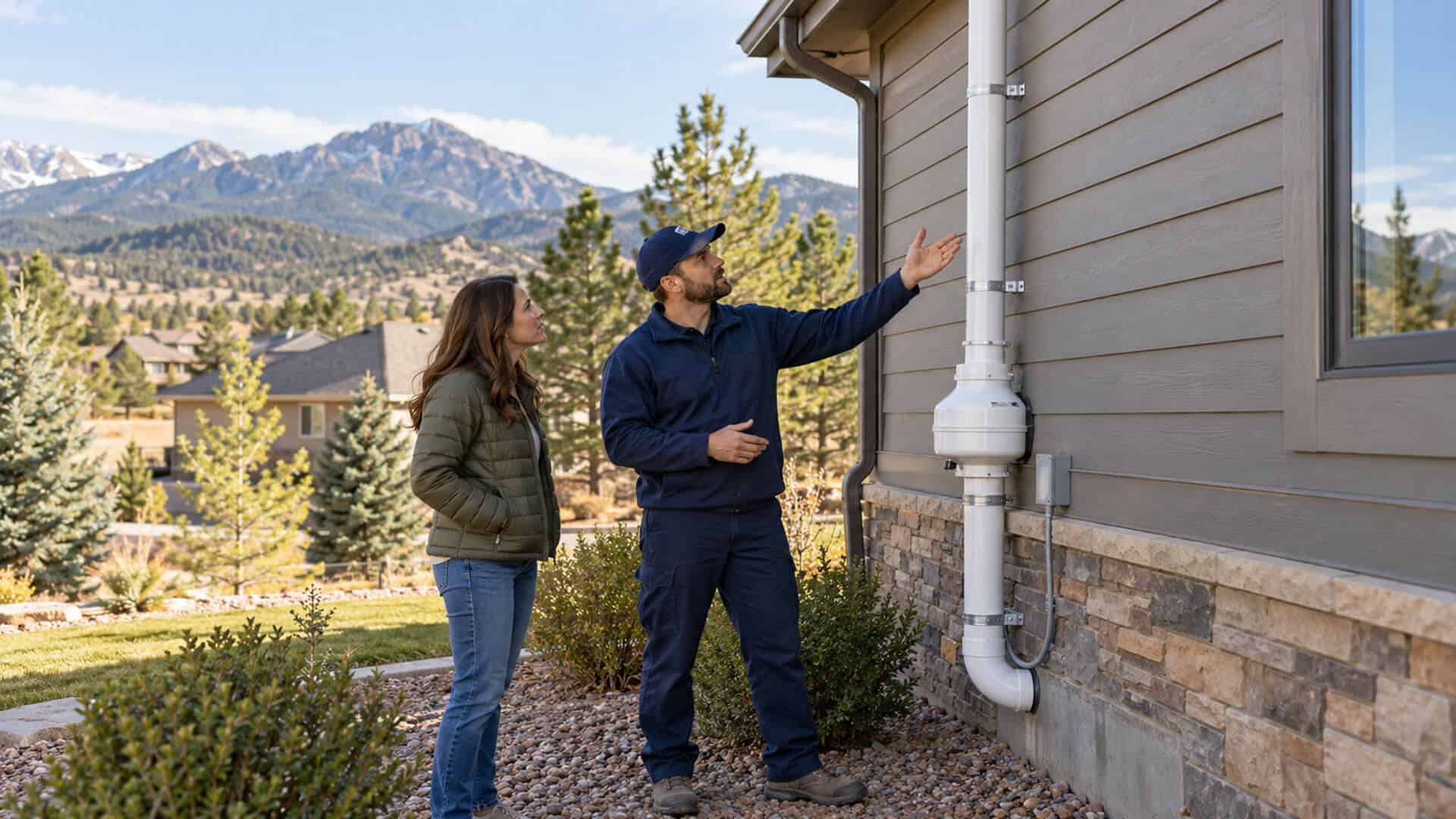
Many residential systems use active soil depressurization. This approach uses a collection point and vent piping, usually with a specialized fan, to draw radon from beneath the building and discharge it outdoors.
Sealing relevant openings can support the system’s performance, but sealing alone is generally not a reliable substitute for an appropriately designed mitigation system.
4. Post-Installation Testing
Installation is not the final step. Follow-up testing helps establish whether the system has successfully reduced indoor radon concentrations.
Homeowners should also understand how to monitor the system, recognize signs of equipment problems, and arrange maintenance when necessary.
For an overview of radon reduction methods, consult the EPA’s official Consumer’s Guide to Radon Reduction.
Radon Mitigation Services in Colorado: What Makes Local Expertise Important?
Choosing among providers offering Radon Mitigation Services in Colorado requires more than comparing prices. Contractors should understand how different foundation types, building layouts, and site conditions influence the design and performance of a mitigation system.
Colorado properties can vary considerably, from established homes with basements to mountain cabins, crawl-space structures, and newer residences with modern foundation systems.
Local knowledge can help a contractor evaluate these differences and recommend a practical solution for the individual property.
When comparing contractors, consider the following factors:
- Relevant experience: Ask about experience with your property’s foundation type and similar radon concerns.
- Professional qualifications: Verify applicable state and local requirements, training, certifications, and references.
- System design: Request an explanation of the proposed mitigation method and why it suits your home.
- Transparent estimates: Understand what the estimate includes, including equipment, installation, testing, and any additional work.
- Performance verification: Ask how post-installation testing will be completed and documented.
- Maintenance guidance: Confirm how to check system operation and whom to contact if the equipment requires service.
A responsible contractor should explain the proposed work clearly and avoid promising a particular result before evaluating the property.
Radon Mitigation Cripple Creek CO: Protecting Mountain Homes
Homeowners searching for radon mitigation Cripple Creek CO should understand that mountain properties can have different construction characteristics and site conditions that affect radon entry.
Cripple Creek’s location in the Rocky Mountains makes individual property assessment especially important. However, a home’s elevation, age, or proximity to exposed rock does not establish its indoor radon concentration. Testing remains necessary.
Older homes, vacation properties, newer builds, and renovated residences can all experience elevated radon levels. Potential entry points include basement floors, foundation joints, crawl spaces, and gaps around utility penetrations.
A professional radon assessment can help determine whether elevated levels are present and identify a suitable mitigation approach.
Homeowners in Cripple Creek should consider testing when buying a property, finishing a basement, converting a lower level into a bedroom, or discovering that an existing radon system is not operating as expected.
Radon Mitigation Woodland Park CO: What Homeowners Should Know
For people researching radon mitigation Woodland Park CO, the most important consideration is whether their own home has elevated radon levels and, if so, which mitigation method is appropriate.
Woodland Park homeowners may have properties with basements, slab foundations, crawl spaces, or multiple foundation configurations. Each presents different considerations for radon testing and system design.
Testing is particularly worthwhile before purchasing a home or making significant changes to a lower-level living space. A previously completed test can also become less representative after substantial renovations or changes to the building’s ventilation.
If testing identifies elevated radon, a qualified contractor can evaluate the property and determine whether an active mitigation system is appropriate. After installation, follow-up testing helps confirm the reduction achieved.
Aspen Radon serves Woodland Park and surrounding communities with radon testing and mitigation solutions.
How Much Do Radon Mitigation Services Cost?
The cost of radon mitigation depends on the property and the system required. There is no single price that accurately applies to every Colorado home.
Several factors can influence the estimate:
- Foundation type and accessibility: Homes with different foundation configurations may require different equipment, installation methods, and labor.
- System complexity: Larger properties, multiple foundation sections, and challenging piping routes may require more extensive work.
- Equipment requirements: Fan capacity, vent piping, and other components depend on the mitigation design.
- Additional repairs: Some properties may need work to address specific openings or improve the performance of an existing system.
- Testing and verification: Homeowners should clarify whether post-installation testing and any follow-up services are included in the estimate.
When comparing quotes, look beyond the initial price. Ask contractors to explain the proposed design, included services, testing arrangements, warranties if offered, and anticipated maintenance requirements.
Aspen Radon offers homeowners an opportunity to discuss their property’s needs and request an estimate before deciding how to proceed.
How to Maintain a Radon Mitigation System
A properly installed system is intended to reduce radon over the long term, but homeowners should not assume that installation eliminates the need for monitoring.
A few practical habits can help you keep track of system performance.
First, learn how to recognize the system’s normal operating condition. Many active systems include a pressure indicator that can alert you to a potential problem. Ask your contractor to explain what the indicator means for your particular installation.
Second, pay attention to unusual fan noises, visible equipment damage, or signs that the system has stopped operating. Contact a qualified professional if you suspect a problem.
Third, arrange follow-up radon testing after installation and consider periodic retesting, particularly after significant renovations, foundation work, or changes to the home’s ventilation.
Finally, keep installation records and test results in a convenient location. These documents can help with future maintenance, real estate transactions, and decisions about additional work.
The Centers for Disease Control and Prevention’s radon testing guidance provides further information about when and why homeowners should test.
Frequently Asked Questions
1. What radon level requires mitigation?
The EPA recommends fixing a home when radon levels reach or exceed 4.0 pCi/L. Because there is no known completely risk-free exposure level, homeowners may also consider reducing readings between 2.0 and 4.0 pCi/L.
2. How do I know if my home needs radon mitigation?
Start with a radon test. If the result is elevated, consult a qualified radon professional to interpret the findings and determine whether mitigation is appropriate. Visible foundation damage alone cannot establish indoor radon levels.
3. Are radon mitigation services necessary for new homes?
New homes can also have elevated radon levels. Radon-resistant construction features may help reduce the potential for radon entry, but testing is still necessary to determine actual indoor concentrations.
4. How long does radon mitigation take?
Installation time depends on the property’s size, foundation, system design, and accessibility. A straightforward installation may be completed in a day, while more complex projects can require additional time. Ask the contractor for a property-specific estimate.
5. Can sealing foundation cracks eliminate radon?
Not reliably. Sealing cracks and other openings may support mitigation, but the EPA does not recommend relying on sealing alone to reduce radon. A properly designed system may be needed to achieve a meaningful and consistent reduction.
6. Should I test for radon after installing a mitigation system?
Yes. Post-mitigation testing helps verify whether radon levels have decreased. Homeowners should follow professional testing instructions and retain the results for future reference.
7. Where can I find radon mitigation contractors in Cripple Creek or Woodland Park?
Aspen Radon serves both Cripple Creek and Woodland Park, along with other Southern Colorado communities. Homeowners can contact the company to discuss testing, property conditions, and potential mitigation options.
8. Does radon mitigation eliminate all radon from a home?
Mitigation is designed to reduce radon concentrations, not necessarily eliminate every trace of the gas. Results should be verified through follow-up testing, and periodic retesting can help confirm that the system continues to perform as expected.
Protect Your Colorado Home With Aspen Radon
Radon is an invisible concern, but homeowners can take practical steps to understand and reduce their exposure. Testing provides the information needed to make informed decisions, while a properly designed mitigation system can help reduce elevated indoor radon levels.
Whether you are looking for Radon Mitigation Services and Contractors, researching radon mitigation in Cripple Creek, CO, or comparing options for radon mitigation in Woodland Park, CO, choosing a qualified professional is an important step toward protecting your property.
Ready to take the next step? Contact Aspen Radon to discuss your radon concerns and request an estimate for your home. Start with testing, understand your results, and make decisions based on the needs of your property.
Visit Aspen Radon to learn more about available services and schedule your next step toward better indoor air quality.
About the Author
Chris Davis
Chris Davis is the owner and founder of Aspen Radon, a trusted radon testing and mitigation company serving Southern Colorado since 1998. With decades of hands-on experience in radon testing, radon inspections, mitigation, and remediation, Chris helps homeowners understand radon risks and make informed decisions about their indoor air quality. Through Aspen Radon, he provides knowledgeable guidance and practical solutions tailored to each property’s needs, helping homeowners reduce radon exposure and maintain healthier indoor environments.