8 Things Every Homeowner Should Know
Choosing the right radon mitigation professional is an important decision for any homeowner. Radon is an invisible, naturally occurring radioactive gas that can enter a home through foundation cracks, crawl spaces, sump pits, and other openings. Because it has no color, smell, or taste, homeowners cannot determine whether their indoor air contains elevated radon levels without proper testing.
For homeowners looking for Radon Mitigation Services in Colorado, finding an experienced and qualified professional is essential. A properly designed mitigation system can significantly reduce indoor radon concentrations, while an improperly installed system may fail to address the problem effectively.
Whether you live in Colorado Springs, Woodland Park, or another Southern Colorado community, knowing what to look for before hiring a contractor can help you make a more informed decision.
In this guide, we’ll explain how to evaluate radon professionals, what questions to ask, what qualifications matter, and why working with an experienced company like Aspen Radon can make a difference.
Why Is Hiring a Qualified Radon Mitigation Expert Important?
Radon develops naturally when uranium in soil and rock breaks down. It can move through the ground and enter buildings through small openings in foundations, crawl spaces, sump pits, and other structural areas.
According to the U.S. Environmental Protection Agency (EPA), radon is a naturally occurring radioactive gas and a leading cause of lung cancer among nonsmokers. Because it has no color, smell, or taste, homeowners cannot determine whether their indoor air contains elevated radon levels without proper testing.
Colorado homeowners should pay particular attention to radon because the state’s geology creates conditions where elevated indoor radon levels are a significant concern. However, radon concentrations can vary considerably between neighboring properties. Even newly constructed homes are not automatically protected.
The EPA recommends taking action to reduce radon when indoor concentrations reach or exceed 4.0 picocuries per liter (pCi/L). A qualified radon mitigation professional understands how to evaluate a property’s construction, identify potential radon entry pathways, and recommend an appropriate reduction system.
Hiring the right expert helps homeowners avoid unnecessary installations, poorly designed systems, and continued exposure to elevated radon levels.
8 Ways to Find a Reliable Radon Mitigation Expert in Colorado
Finding a trustworthy contractor involves more than comparing prices or choosing the first company that appears in Google search results. Here are eight important factors to consider.
1. Verify Professional Certification and Licensing
Start by checking whether the contractor has the appropriate qualifications to perform radon measurement and mitigation.
In Colorado, professionals performing radon measurement or mitigation generally must hold the applicable state license unless an exemption applies. Colorado’s licensing requirements recognize certifications from established organizations, including:
- National Radon Proficiency Program (NRPP)
- National Radon Safety Board (NRSB)
These organizations maintain professional certification programs designed to demonstrate knowledge of radon testing, mitigation methods, and industry practices.
Before hiring a contractor, ask for their certification details and verify their current licensing status through the appropriate Colorado resources.
The EPA also provides helpful guidance on how to find a qualified radon service provider. This resource explains what homeowners should consider when evaluating radon professionals and selecting someone to handle testing or mitigation.
A reliable contractor should be comfortable discussing their qualifications rather than avoiding questions about training and licensing.
2. Look for Experience With Colorado Homes
Radon mitigation is not a one-size-fits-all service. Different properties have different foundations, soil conditions, construction methods, and potential radon entry points.
For example, a home with a basement may require a different mitigation approach than a property built on a slab or one with a crawl space.
This is particularly important when searching for radon mitigation in Woodland Park, CO services. Homeowners should look for professionals familiar with Southern Colorado properties and the construction conditions commonly encountered in the region.
Ask potential contractors:
- How long have you been providing radon mitigation services?
- Have you worked with homes that have similar foundations?
- What mitigation methods do you recommend for my property?
- Can you provide examples of previous projects?
Experience helps contractors recognize potential complications and develop solutions based on the actual conditions of the property.
Aspen Radon has been serving Southern Colorado since 1998, providing professional radon inspection, testing, mitigation, and remediation services.
3. Choose a Company That Provides Both Testing and Mitigation Guidance
Reliable radon mitigation starts with accurate measurements.
Before recommending a mitigation system, a professional should understand the property’s existing radon concentrations. Testing provides measurable information that helps determine whether mitigation is appropriate and how the problem should be addressed.
When comparing companies offering radon testing and mitigation, ask whether they can explain the complete process, including:
- Initial radon measurement and testing.
- Evaluation of the property’s foundation and structural conditions.
- Identification of potential radon entry pathways.
- Recommendations for an appropriate mitigation system.
- Post-installation testing to evaluate system performance.
Be cautious of contractors who recommend expensive installations without explaining the testing results or evaluating the property.
A trustworthy professional should be able to explain why a particular solution is appropriate and how its effectiveness will be evaluated.
4. Ask About Their Radon Mitigation Methods
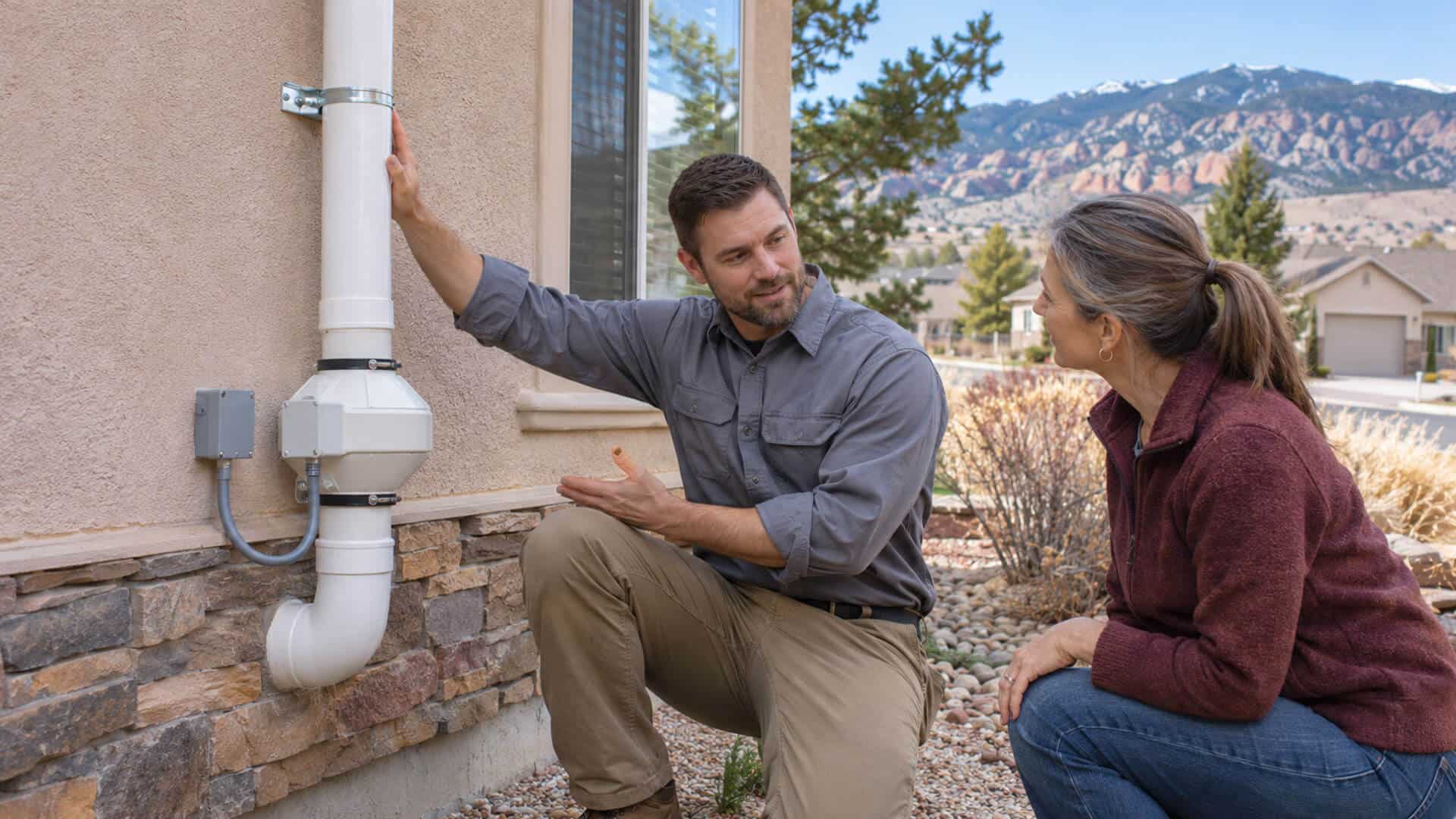
Different homes require different mitigation approaches. One commonly used method is active soil depressurization, which uses a fan and vent pipe to draw radon from beneath the foundation and release it outdoors.
Depending on the property, a mitigation system may involve:
- Sub-slab depressurization.
- Crawl space depressurization.
- Specialized vent pipe configurations.
- Radon mitigation fans.
- Sealing relevant foundation openings.
The correct approach depends on the home’s foundation, soil characteristics, building layout, and testing results.
Ask the contractor to explain how the proposed system will work, where the components will be installed, and how the system will prevent radon from accumulating inside the home.
A qualified professional should be able to explain the installation in straightforward language without relying on confusing technical terminology.
5. Read Customer Reviews and Request References
Online reviews can provide valuable insight into a company’s professionalism, communication, workmanship, and customer service.
Before making a decision, check Google reviews and other reputable review platforms. Look beyond the overall star rating and pay attention to what previous customers actually say.
Consider whether customers mention:
- Professional and courteous technicians.
- Clear explanations of testing results.
- Fair and transparent pricing.
- Clean and organized installations.
- Reliable follow-up after installation.
- Successful radon reduction results.
You can also ask the contractor for references from previous customers.
For homeowners researching Radon Mitigation Services in Colorado, customer feedback can help distinguish experienced professionals from contractors who make promises without demonstrating consistent service quality.
However, reviews should be considered alongside credentials, documented experience, and a clear installation process.
6. Request a Detailed Estimate and Compare More Than Price
Getting multiple estimates is a practical way to understand your options and determine whether a contractor’s recommendations are reasonable.
However, choosing the cheapest quote is not always the best financial decision.
A professional estimate should explain what is included in the proposed project, such as:
- Property evaluation and system design.
- Labor and installation costs.
- Mitigation equipment and materials.
- Electrical requirements, if applicable.
- Required permits, where applicable.
- Post-installation testing.
- Warranty and maintenance information.
Ask whether additional expenses could arise during installation and whether the contractor provides written documentation of the proposed work.
Comparing estimates based on the actual scope of work makes it easier to identify differences in equipment, installation methods, and service commitments.
A reliable radon company should be willing to explain its pricing and answer questions before you approve the project.
7. Ask About Post-Installation Testing and System Performance
Installing a mitigation system is only part of the process. Homeowners also need to know whether the system successfully reduced indoor radon levels.
Post-mitigation testing provides measurable results and helps determine whether the system is performing as intended.
Ask your contractor:
- When should post-installation testing be performed?
- Who will conduct the follow-up test?
- Will I receive written test results?
- What happens if radon levels remain elevated?
- How often should I retest my home?
The EPA recommends post-mitigation testing to verify that radon concentrations have been reduced.
You should also understand how to monitor the system. Many active systems include a visible indicator that helps homeowners determine whether the mitigation fan is operating.
Remember that a mitigation system requires appropriate maintenance, and periodic testing remains important even after successful installation.
8. Evaluate Communication, Transparency, and Customer Support
A reliable contractor should make the entire process understandable.
From the initial consultation to the final installation, homeowners should know what is happening, why certain recommendations are being made, and what results they can reasonably expect.
Watch for warning signs such as:
- Pressure to purchase immediately.
- Guaranteed results without proper testing or evaluation.
- Unwillingness to provide credentials.
- Vague or incomplete estimates.
- No explanation of the proposed mitigation method.
- No clear plan for post-installation verification.
Professional communication is an important part of quality service. You should feel comfortable asking questions and receiving straightforward answers before committing to a project.
Why Homeowners in Woodland Park, CO Should Take Radon Seriously
Woodland Park homeowners should not assume their homes are protected simply because of their location, age, or construction type.
Radon levels can vary from property to property, making individual testing essential. Homes with basements, crawl spaces, or slab foundations can all experience radon intrusion. Changes in soil conditions, weather, ventilation, and indoor air pressure can also influence radon concentrations.
If you are researching radon mitigation Woodland Park CO, start by obtaining reliable test results and finding a qualified professional who can evaluate your property’s specific conditions.
The Colorado Department of Public Health and Environment (CDPHE) provides state-specific information about radon exposure, testing, and mitigation. Homeowners can use these resources to better understand Colorado’s radon concerns and make informed decisions about protecting their properties.
Working with a knowledgeable regional contractor can help you understand the available mitigation options and determine the most appropriate solution for your home.
Why Consider Aspen Radon for Professional Radon Services?
Finding the right radon contractor means choosing a company that understands the importance of accurate testing, appropriate system design, and measurable results.
Aspen Radon has served Southern Colorado since 1998, helping homeowners identify radon concerns and address elevated indoor radon levels through professional radon services.
The company provides:
- Professional Radon Testing: Indoor radon measurements help homeowners understand existing radon concentrations and determine whether additional action is needed.
- Customized Radon Mitigation Systems: Mitigation recommendations are based on the property’s foundation, layout, soil conditions, and other relevant structural factors.
- Radon Inspection and Evaluation: Understanding potential entry pathways and building conditions helps guide appropriate mitigation decisions.
- Radon Remediation: Solutions are developed to address elevated radon concentrations and improve indoor air quality.
- Post-Mitigation Verification: Follow-up testing helps evaluate whether the installed system has effectively reduced indoor radon levels.
Rather than relying on a generic installation approach, Aspen Radon focuses on understanding the conditions of each property and providing practical solutions.
Frequently Asked Questions About Finding a Radon Mitigation Expert
1. How do I find a qualified radon mitigation contractor in Colorado?
Look for a contractor with the appropriate Colorado license and recognized professional certification through organizations such as NRPP or NRSB. Review customer feedback, request references, compare written estimates, and ask about testing, installation methods, and post-mitigation verification.
2. What radon level requires mitigation?
The EPA recommends taking action when indoor radon levels reach or exceed 4.0 pCi/L. However, there is no known completely risk-free level of radon exposure. Homeowners may consider reducing levels between 2.0 and 4.0 pCi/L as well.
3. How much does professional radon mitigation cost in Colorado?
The cost depends on the home’s foundation, structural layout, soil conditions, equipment requirements, and complexity of installation. The best approach is to request a property-specific estimate that clearly explains labor, materials, equipment, and follow-up testing.
4. How long does radon mitigation installation take?
Many residential radon mitigation installations can be completed within a day. However, the actual timeline depends on the home’s construction, foundation type, system design, and installation requirements. Your contractor should provide a realistic project schedule.
5. Should I hire a different company for radon testing and mitigation?
Not necessarily. Some companies provide both services, while others specialize in testing or mitigation. What matters most is that testing follows appropriate measurement protocols and that the mitigation system is designed and installed by qualified professionals. Ask about the company’s testing procedures and any potential conflicts of interest.
6. Is radon mitigation necessary for homes in Woodland Park, CO?
Radon testing is recommended for homes throughout Colorado, including Woodland Park. Radon levels vary between properties, so location alone cannot determine whether a home needs mitigation. Testing is the only way to establish indoor radon concentrations.
7. Does a radon mitigation system need regular maintenance?
Yes. Active mitigation systems typically contain fans and other components that require periodic inspection. Homeowners should monitor system indicators, address unusual noises or fan failures, and conduct periodic radon testing to evaluate continued performance.
8. How do I know if my radon mitigation system is working?
The best way to evaluate performance is through post-installation radon testing. A system indicator can show whether the fan is operating, but it cannot independently confirm that indoor radon levels have been reduced. Follow-up measurements provide the information needed to evaluate the results.
Protect Your Home With Professional Radon Mitigation Services in Colorado
Finding a reliable radon mitigation expert should be about more than choosing a contractor with an attractive price or impressive advertising. Professional qualifications, accurate testing, property-specific system design, transparent estimates, and post-installation verification all contribute to a successful mitigation project.
If you are concerned about radon exposure or need professional guidance for your property, Aspen Radon is ready to help.
With more than two decades of experience serving Southern Colorado, Aspen Radon provides professional radon testing, inspection, mitigation, and remediation services designed around each property’s needs.
Don’t leave your home’s indoor air quality to guesswork.
Contact Aspen Radon today to request a free on-site estimate or consultation and learn more about the right radon solution for your property.
About the Author
Chris Davis
Chris Davis is the founder and owner of Aspen Radon, a professional radon testing and mitigation company serving Southern Colorado since 1998. With decades of industry experience, Chris is dedicated to helping homeowners identify radon concerns, understand their testing results, and explore effective mitigation solutions. Through Aspen Radon, he provides practical expertise in radon testing, inspections, mitigation, and remediation, helping property owners make informed decisions to improve indoor air quality and reduce radon exposure.